Between 1845 and 1852, Ireland experienced one of the most devastating catastrophes in modern European history. The Great Famine - An Gorta Mór in Irish - killed approximately one million people and forced another million to emigrate in just seven years. But the Famine was not a single event; it was the beginning of a wave of emigration that would continue for over a century and scatter Irish people across every continent on earth.
What caused the Great Famine?
The cause was a potato blight - Phytophthora infestans - that destroyed the crop on which the majority of Ireland’s population depended for survival. But the scale of the disaster was shaped by political and economic forces: absentee landlords, export of food from Ireland during the famine, inadequate government relief, and the eviction of starving tenants from their homes. Entire villages were emptied. Workhouses overflowed. Coffin ships carried the desperate across the Atlantic in conditions so appalling that many died during the voyage.
Where did Irish emigrants settle?
Those who survived the crossing settled in the growing cities of America, Canada, Australia, and Britain. In the United States, Irish immigrants clustered in Boston, New York, Philadelphia, and Chicago, taking whatever work they could find - building canals, railways, and the infrastructure of a growing nation. They faced severe discrimination, poverty, and anti-Catholic prejudice, but they persevered. Within a generation, Irish Americans were building churches, schools, and political organisations that would shape American life for centuries.
Did emigration end when the Famine did?
The emigration didn’t stop when the Famine ended. Ireland’s population, which had peaked at over 8 million before 1845, continued to decline through the late 1800s and into the 1900s. Economic hardship, limited opportunities, and the pull of established Irish communities abroad meant that emigration became woven into the fabric of Irish life. By the mid-20th century, Ireland’s population had fallen below 3 million - while the global Irish diaspora numbered in the tens of millions.
Why do 70 million people claim Irish heritage today?
Today, an estimated 70 million people worldwide claim Irish heritage. In the United States alone, over 30 million people identify as Irish American - more than six times the current population of Ireland. Significant Irish communities exist in Canada, Australia, the United Kingdom, Argentina, and dozens of other countries. The Irish diaspora is, proportionally, one of the largest of any nation on earth.
This vast diaspora carries with it a deep emotional connection to Ireland. For many families, stories of the old country have been passed down through generations - stories of the townlands they left, the hardships they endured, and the hope they carried to new shores. DNA testing has allowed millions more to discover Irish roots they never knew they had, adding new branches to a family tree that spans the globe.
How can you honour your Famine-era heritage?
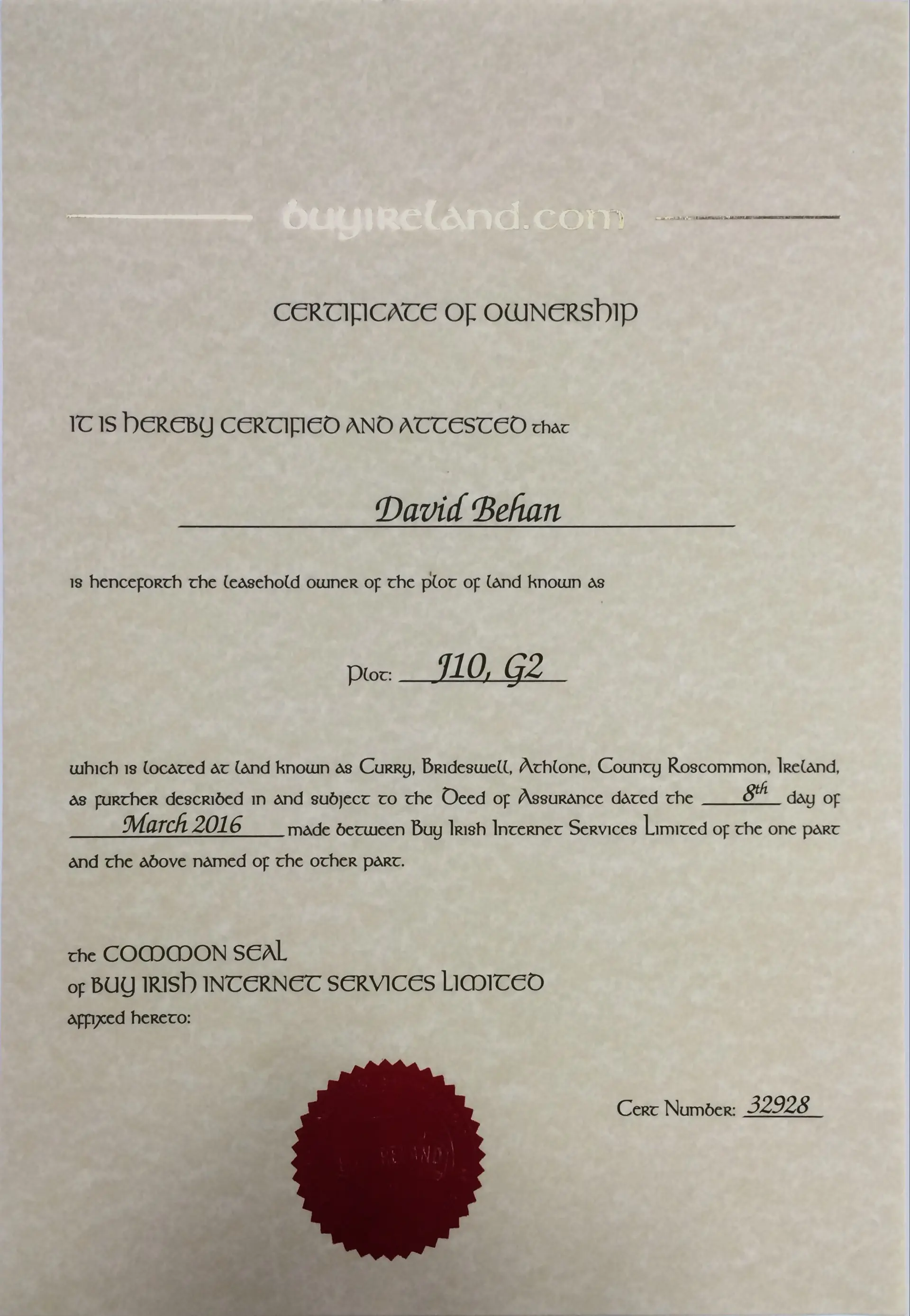
Owning a piece of Irish land is a meaningful way to honour this heritage. At BuyIreland.com, you can own a genuine plot of countryside in County Roscommon - in the heart of the landscape your ancestors may have known. Each plot comes with a personalised Certificate of Ownership and legal Deed of Assurance, starting from just $49 with free worldwide shipping. It’s a small but powerful way to reclaim a connection to the land your family once called home. Visit BuyIreland.com to learn more.